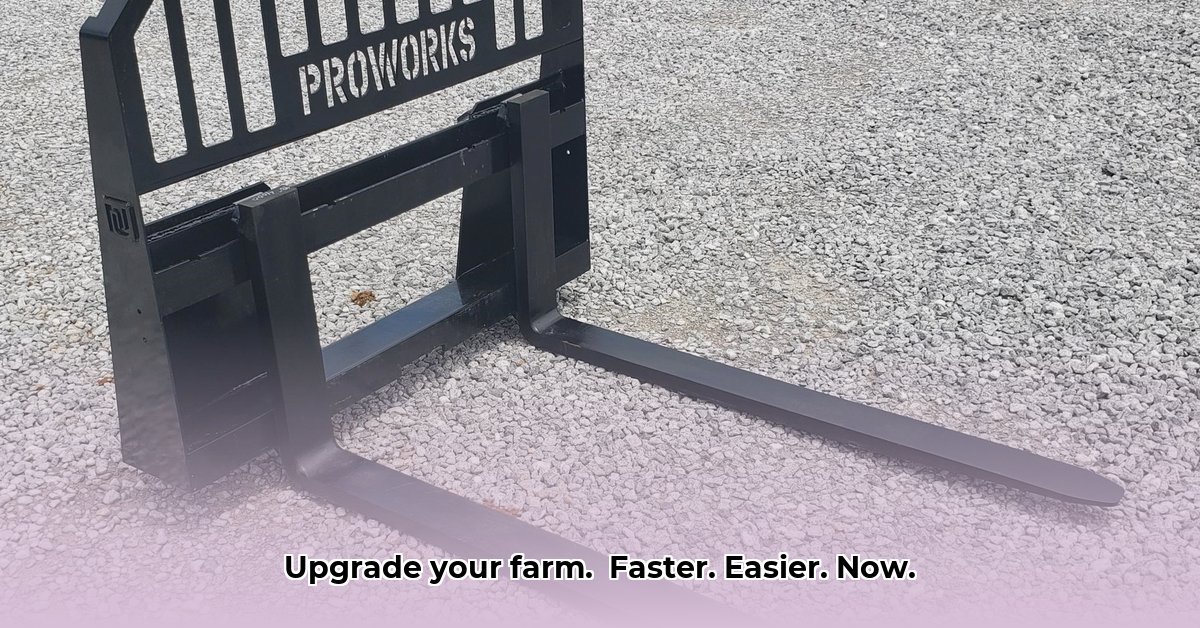
Tired of wrestling with heavy loads? Quick-attach tractor forks revolutionize material handling on farms, offering speed and efficiency. This guide provides a comprehensive overview, from selecting the right equipment to troubleshooting common issues. For more on tractor implements, check out this helpful resource: tractor implements.
Understanding Tractor Fork Quick Attach Systems
Quick-attach systems drastically reduce the time spent changing attachments, allowing for rapid transitions between tasks. This translates to increased productivity and reduced labor costs. Instead of manually fastening pins and bolts, these systems offer a swift and secure connection, maximizing your tractor’s versatility.
Types of Quick-Attach Systems
Several quick-attach systems are available, each with unique characteristics:
Universal Systems: These systems are designed to work with various tractor brands, offering broad compatibility. While convenient, they might not always provide the perfect fit compared to brand-specific alternatives.
Brand-Specific Systems: Manufacturers like John Deere and Kubota offer systems specifically designed for their tractors. This ensures seamless integration and optimal performance but limits compatibility to their respective brands.
European-Style Systems: Known for their robust construction and smooth operation, these systems often demand slightly more complex installation procedures. They are well-suited for demanding tasks.
Here's a comparison:
| System Type | Advantages | Disadvantages | Typical Cost |
|---|---|---|---|
| Universal | Wide compatibility, generally lower initial cost | Potential for slightly less precise fit, possible wobble | Lower |
| Brand-Specific | Seamless integration, optimal performance for that brand | Limited compatibility, typically higher cost | Moderate to High |
| European-Style | Robust construction, smooth operation | More complex installation, potentially higher cost | Moderate to High |
Selecting the Right Quick-Attach Forks
Choosing the right forks is vital for safety and efficiency. Consider these factors:
Tractor Lifting Capacity: Never exceed your tractor's maximum lifting capacity. Consult your tractor's manual for this critical information.
Load Requirements: Different forks are needed for lightweight hay bales and heavy pallets. Incorrect fork selection can lead to damage or accidents.
Fork Length: Selecting an appropriate fork length ensures stability and efficient handling of materials. Too short, and you'll struggle. Too long, and risk instability.
Installation and Setup: A Step-by-Step Guide
While specific instructions vary, these general steps apply:
Precise Alignment: Carefully align the forks with the quick-attach system on your tractor. This step is critical for safe and efficient operation.
Secure Connection: Engage locking pins or hydraulic mechanisms firmly, ensuring a secure and stable connection.
Testing: Before lifting any substantial weight, test the connection using a light object to verify stability.
Safe Operation and Maintenance
Prioritize safety at all times:
Respect Weight Limits: Never exceed weight limits, preventing damage and accidents.
Proper Lifting Techniques: Avoid jerky movements. Lift and lower smoothly to maintain balance, protecting both equipment and operator.
Regular Maintenance: Lubricate moving parts, inspect for wear and tear, and replace damaged components promptly. Preventative maintenance is crucial for longevity and safe operation. Regular lubrication, every 50 hours of operation, is recommended by most manufacturers.
Troubleshooting Common Problems
Hydraulic Leaks: Inspect hoses and seals for damage. Replace damaged parts immediately.
Pin Failures: Replace worn or broken pins promptly. These are significant safety hazards.
Misalignment: Double-check alignment before attachment to prevent damage to the quick-attach system.
Conclusion: Maximize Farm Efficiency
Quick-attach tractor forks significantly enhance farm efficiency and safety. By selecting the appropriate system, following safe operation procedures, and performing regular maintenance, you'll maximize productivity and prolong the life of your equipment. Remember, safety and regular maintenance are investments in your long-term success.
Key Takeaways:
- Matching fork capacity to your tractor's lifting capacity is crucial for preventing accidents.
- Regular maintenance, including lubrication and inspections, extends the life of your equipment.
- Understanding the different types of quick-attach systems ensures compatibility and ease of use.